
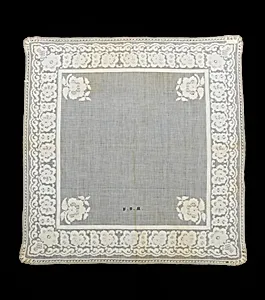
Kerchief
Unknown Artist
late 19th century
Medium
cotton
Classification
Headcloth (Kerchief)
Culture
Philippine
Department
Costume Institute
Museum
Metropolitan Museum of Art, New York, NY
Credit
Brooklyn Museum Costume Collection at The Metropolitan Museum of Art, Gift of the Brooklyn Museum, 2009; Gift of Mr. and Mrs. Maxime L. Hermanos, 1961
Accession Number
2009.300.1285
Rights
Public Domain
Tags
Art Historical Context
This delicate cotton kerchief from the late 19th exemplifies the rich textile traditions of the Philippines, where such accessories were essential to everyday and formal attire. Produced during a period of Spanish colonial influence transitioning to American rule, the kerchief—known locally as a *pañuelo*—was typically worn by women draped over the shoulders, head, or as a shawl, adding elegance and modesty to the traditional *terno* or *baro't saya* outfits. Crafted from cotton, a widely available and breathable medium ideal for the tropical climate, this piece likely features floral motifs, a hallmark of Philippine embroidery and weaving. These blooming designs reflect the archipelago's deep connection to nature, symbolizing fertility, beauty, and abundance in local culture. Handworked by skilled artisans, often in rural communities, such kerchiefs showcased intricate techniques passed down through generations, blending indigenous patterns with colonial introductions like European lace influences. Now housed in the Metropolitan Museum of Art's Costume Institute, gifted from the Brooklyn Museum collection, this anonymous artwork offers a tangible glimpse into late 19th-century Filipino life, highlighting the artistry of everyday objects and the enduring legacy of women's craftsmanship in Southeast Asian history.