
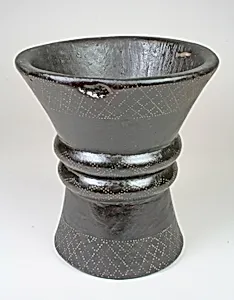
Kero
early 17th century
Medium
Wood, tin inlay, red pigment
Dimensions
H. 8 5/8 × W. 7 1/2 × D. 7 1/2 in. (21.9 × 19.1 × 19.1 cm)
Classification
Wood-Containers
Culture
Quechua
Department
Arts of Africa, Oceania, and the Americas
Museum
Metropolitan Museum of Art, New York, NY
Credit
Bequest of Arthur M. Bullowa, 1993
Accession Number
1994.35.19
Rights
Public Domain
Art Historical Context
This exquisite *Kero*, crafted by Quechua artists in early 17th-century Peru, exemplifies the enduring traditions of Andean craftsmanship during the colonial era. Quechua peoples, inheritors of Inca heritage, used these shallow, footed wooden cups for drinking *chicha*, a fermented corn beverage central to social, ritual, and diplomatic gatherings. Measuring just 8⅝ inches tall, its compact form made it ideal for communal use, often paired with metal vessels in ceremonies symbolizing hospitality and alliance. The kero's artistry shines through its wood construction enhanced by intricate tin inlays and vibrant red pigment, techniques blending pre-Columbian woodworking with introduced colonial metalsmithing. The tin—likely sourced from Bolivian mines—creates shimmering geometric or figurative patterns, highlighting the Quechua mastery of inlay work that elevated everyday objects to status symbols. This fusion reflects cultural resilience amid Spanish influence, preserving indigenous aesthetics. Housed in the Metropolitan Museum of Art's Department of the Arts of Africa, Oceania, and the Americas (Bequest of Arthur M. Bullowa, 1993), this kero invites us to toast to Peru's rich legacy, where art and ritual intertwine.