
Kettle
Unknown Artist
1700–1900
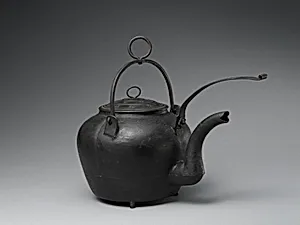
Medium
Iron
Dimensions
14 1/2 × 9 in., 17 in. (36.8 × 22.9 cm)
Classification
Kettle
Department
The American Wing
Museum
Metropolitan Museum of Art, New York, NY
Credit
Gift of Mrs. Russell Sage, 1909
Accession Number
10.125.599z (2)
Rights
Public Domain
Art Historical Context
This unassuming iron kettle, forged by an unknown artisan between 1700 and 1900, exemplifies the craftsmanship of early American households. Standing 14½ inches tall with a 9-inch diameter and a bail handle extending to 17 inches, it designed for practical use over open hearth fires. Iron, a resilient and abundant material, was the go-to medium for such utilitarian objects, hand-forged by skilled blacksmiths using basic tools like hammers and anvils to shape molten metal into durable forms. In colonial and early federal America, kettles like this were kitchen essentials, simmering stews, boiling laundry, or rendering fats in self-sufficient homes without modern appliances. Its broad date range reflects evolving designs across two centuries, from simple colonial forms to slightly refined 19th-century versions, highlighting regional ironworking traditions in places like Pennsylvania or New England. Housed in The Metropolitan Museum of Art's American Wing, this kettle—generously gifted by Mrs. Russell Sage in 1909—offers a tangible glimpse into everyday life. Far from fine art, it celebrates the artistry in functionality, reminding us how ordinary objects shaped the rhythm of American domestic history.