
Key
Unknown Artist
16th century
Medium
Iron
Dimensions
Length: 5 7/8 in. (14.9 cm)
Classification
Metalwork-Iron
Culture
European
Department
European Sculpture and Decorative Arts
Museum
Metropolitan Museum of Art, New York, NY
Credit
Gift of Irwin Untermyer, 1954
Accession Number
54.7.21
Rights
Public Domain
Tags
Art Historical Context
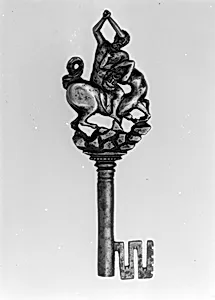
This remarkable 16th-century iron key, measuring just 5 7/8 inches (14.9 cm) in length, exemplifies the exquisite metalwork of Renaissance Europe. Crafted by an unknown artist, its bow— the handle portion—features intricate figures of men and centa, mythical half-human, half-horse beings from classical mythology. Displayed in the Metropolitan Museum of Art's Department of European Sculpture and Decor Arts, it was generously gifted by Irwin Untermyer in 4. In the 16th century, keys were more than mere tools; elaborate designs like this one transformed them into status symbols for nobility and clergy, often unlocking treasures, doors to sacred spaces, or private chambers. The iron medium, forged through skilled blacksmithing techniques such as hammering and chiseling, allowed for fine detailing despite its durability, blending functionality with artistry. Centaurs, evoking ancient Greek lore of wild strength and wisdom, added a layer of symbolic intrigue, perhaps alluding to guardianship or untamed power. Though its exact origin within Europe remains mysterious, this key invites us to ponder the era's fusion of myth and craftsmanship, reminding visitors of how everyday objects became canvases for storytelling in the decorative arts.