
Key
Unknown Artist
13th or 14th century (?)
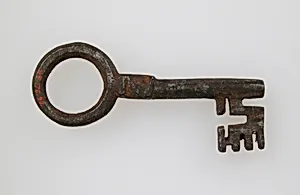
Medium
Iron
Dimensions
Overall: 2 5/8 x 1 x 1/4 in. (6.7 x 2.5 x 0.7 cm)
Classification
Metalwork-Iron
Culture
French (?)
Department
Medieval Art
Museum
Metropolitan Museum of Art, New York, NY
Credit
Purchase, De Souhami Collection, Rogers Fund, 1906
Accession Number
06.176.92
Rights
Public Domain
Art Historical Context
This modest iron key, dating to the 13th or 14th century and possibly of French origin, offers a tangible glimpse into medieval daily life and craftsmanship. Measuring just 2⅝ x 1 x ¼ inches, its compact form belies its practical purpose: likely securing doors, chests, or gates in a world where locks protected valuables amid feudal uncertainties. Acquired by The Metropolitan Museum of Art in1906 through the De Souhami Collection and Fund, it resides in the Medieval Art department, classified as iron metalwork—a testament to its enduring artistic merit. Forged from iron, a durable yet challenging medium, the key showcases the era's skilled blacksmithing techniques. Medieval smiths heated and hammered iron into precise shapes, often with simple bow or bit designs like this one, balancing functionality with subtle ornamentation. Keys held profound symbolic weight too—evoking authority for nobles, clergy, or merchants who controlled access to sacred spaces or treasures. Though its creator remains unknown, this artifact bridges the mundane and the monumental, reminding us how everyday objects embodied the ingenuity of medieval Europe. A small key, indeed, but one that unlocked more than doors—it reveals a society's values and skills.