
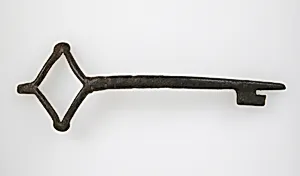
Key
Unknown Artist
13th century
Medium
Iron
Dimensions
Overall: 7 5/8 x 2 1/2 x 3/8 in. (19.4 x 6.3 x 0.9 cm)
Classification
Metalwork-Iron
Culture
German
Department
Medieval Art
Museum
Metropolitan Museum of Art, New York, NY
Credit
Rogers Fund, 1910
Accession Number
10.100.109
Rights
Public Domain
Art Historical Context
Step into the world of medieval Germany with this striking 13th-century iron, a humble yet powerful artifact from the Metropolitan Museum Art's Medieval Art collection Measuring about 7 5/8 by 2 1/2 inches, its sturdy form—forged from durable iron—hints at everyday utility turned into enduring craftsmanship. Acquired through the Rogers Fund in 0, this key exemplifies the metalwork traditions of the time, where blacksmiths transformed raw ore into functional objects of precision and strength. In the High Middle Ages, keys like this one were symbols of authority and security, used to lock chests, doors, and gates in homes, monasteries, and castles across Europe. German ironworkers were renowned for their technical skill, hammering and shaping hot metal with hammers and anvils to create intricate bow designs and sturdy shanks that could withstand daily wear. Though simple in appearance, its survival over 800 years speaks to iron's resilience and the object's practical importance in a society reliant on physical safeguards. Today, this unassuming key invites us to ponder the unsung artistry of medieval life—where even the mundane held profound utility and subtle beauty. A testament to anonymous makers, it bridges the gap between utility and history, reminding visitors of the hands that once gripped it tightly.