
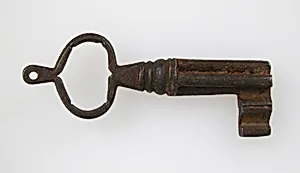
Key
Unknown Artist
15th century
Medium
Iron
Dimensions
Overall: 3 1/2 x 1 1/2 x 1/2 in. (8.9 x 3.8 x 1.3 cm)
Classification
Metalwork-Iron
Culture
German
Department
Medieval Art
Museum
Metropolitan Museum of Art, New York, NY
Credit
Rogers Fund, 1910
Accession Number
10.100.136
Rights
Public Domain
Art Historical Context
This unassuming yet intriguing iron key, forged in 15th-century Germany, a glimpse into the everyday craftsmanship of the late Middle Ages. Measuring just 3½ x 1½ x ½ inches, its compact form belies its potential importance—likely used to secure doors, chests, or sacred spaces in a world where locks guarded wealth, secrets, and power. Acquired through the Rogers Fund in 1910, it now resides in the Metropolitan of Art's Medieval Art department, classified as fine metalwork. In medieval Europe, keys were more than mere tools; they symbolized authority, from ecclesiastical officials locking reliquaries to nobles protecting their estates. German ironworkers of the period excelled in forging durable, functional objects like this, employing techniques such as hammering and shaping heated metal over anvils. The key's simple design reflects the practical artistry of the era, where blacksmiths balanced utility with subtle ornamental bows or bits, though wear from centuries of use adds its own patina of history. As a cultural artifact, this key evokes the rhythms of medieval life in the Holy Roman Empire, a time of feudal hierarchies and burgeoning trade. It reminds us that even humble objects in iron—abundant and resilient—were essential to security and society, showcasing the skilled hands behind Europe's enduring material heritage.