
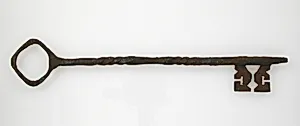
Key
Unknown Artist
first half 14th century
Medium
Iron
Dimensions
Overall: 13 x 2 1/4 x 1/2 in. (33 x 5.7 x 1.2 cm)
Classification
Metalwork-Iron
Culture
German
Department
Medieval Art
Museum
Metropolitan Museum of Art, New York, NY
Credit
Rogers Fund, 1910
Accession Number
10.100.147
Rights
Public Domain
Art Historical Context
Step into the medieval world through this striking iron key, crafted by an unknown German artisan in the first half of 14th century. a substantial 13 inches long, functional yet evocative object exemplifies the robust metalwork of the period, forged from iron—a durable material essential for everyday security in an era of castles, churches, and fortified towns. Housed in the Metropolitan Museum of Art's Art department, it was acquired through the Rogers Fund in 0, highlighting its enduring appeal to collectors. In 14th-century Germany, amid the Holy Roman Empire's turbulent landscape of feudal lords and ecclesiastical power, keys like this one held profound practical and symbolic weight. They secured treasure chests, monastery gates, or noble residences, embodying authority and trust. Iron keys were produced by skilled blacksmiths using hammer-forging techniques over anvils, often heated in charcoal forges to shape intricate bows and sturdy shanks. Though simple in form, such objects reflect the era's masterful blend of utility and craftsmanship, bridging the Romanesque and emerging Gothic sensibilities. This unassuming key invites us to ponder the hidden stories of medieval life—unlocked doors, guarded secrets, and the quiet ingenuity of anonymous makers whose work secured history itself.