
Key
Unknown Artist
306–30 B.C.
Medium
Iron
Dimensions
L. 12.3 × W. 1 × Th. 1.3 cm (4 13/16 × 3/8 × 1/2 in.)
Classification
Key
Period
Ptolemaic Period
Department
Egyptian Art
Museum
Metropolitan Museum of Art, New York, NY
Credit
Rogers Fund, 1912
Accession Number
12.181.288
Rights
Public Domain
Tags
Art Historical Context
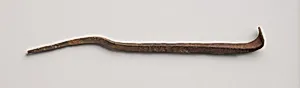
Step into the world of Ptolemaic Egypt with this unassuming yet remarkable iron key, crafted between 306 and 30 B.C. Measuring just 12.3 cm long, this slender artifact (L. 12.3 × W. 1 × Th. 1.3 cm) was likely used to secure doors, chests, or shrines in daily life. Housed in the Metropolitan Museum of Art's Egyptian Art department (Rogers Fund, 1912), it exemplifies the practical ingenuity of a era blending Egyptian traditions with Hellenistic influences under Greek Ptolemaic rulers. Iron was a relatively new and prized material in Egypt during this period, introduced through trade and conquest following Alexander the Great. Previously dominated by bronze and wood, iron keys like this one highlight advancing metallurgical techniques, making durable locks more accessible. Ancient Egyptian locks often featured a pin-tumbler mechanism— an early precursor to modern designs—where the key lifted wooden pins to release a bolt, showcasing sophisticated engineering for the time. This key offers a glimpse into Ptolemaic society's security concerns and craftsmanship, from bustling Alexandria to rural temples. Though created by an unknown artisan, its survival underscores the enduring value of everyday objects in revealing cultural exchanges and technological progress in one of history's most dynamic civilizations.