
Khanjari
Unknown Artist
ca. 1885
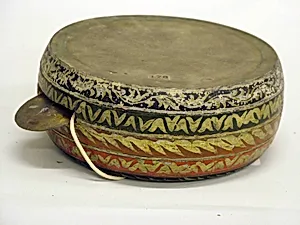
Medium
Metal, wood, skin
Dimensions
Diam. 3 × Depth 6 3/4 in. (7.6 × 17.1 cm)
Classification
Membranophone-single-headed / frame drum
Culture
Indian
Department
Musical Instruments
Museum
Metropolitan Museum of Art, New York, NY
Credit
The Crosby Brown Collection of Musical Instruments, 1889
Accession Number
89.4.178
Rights
Public Domain
Art Historical Context
Step into the vibrant world of 19th-century Indian music the *Khanjari*, a frame drum crafted around 1885. This single-headed membranophone, just 3 inches in diameter and 6 3/4 inches deep, showcases masterful construction from metal, wood, and skin. The taut skin head, stretched over a shallow wooden frame and likely reinforced with metal elements, produces resonant tones when struck, embodying the ingenuity of traditional Indian instrument-making. In Indian culture, frame drums like the *Khanjari* played a vital role in folk traditions, devotional music, and rhythmic accompaniments to dance and storytelling. Its portable size made it ideal for performances in temples, villages, and festivals, where skilled players would create pulsating beats to evoke emotion and community spirit. Though the artist remains unknown, the object's exquisite materials reflect the high level of artisanal skill prevalent in late 19th-century India. Acquired as part of The Crosby Brown Collection of Musical Instruments in 1889, this *Khanjari* now resides in the Metropolitan Museum of Art's Department of Musical Instruments. It invites visitors to appreciate not just its form, but the enduring cultural pulse it carries from India's musical heritage.