
Kheker Friese, Tomb of Tjay
ca. 1550–1458 B.C.
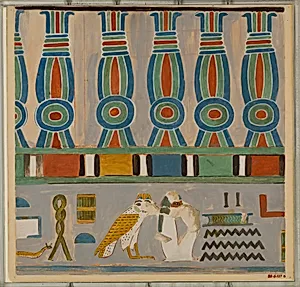
Medium
Tempera on Paper
Dimensions
Framed: h. 13 1/4 in; w. 13 7/8 in
Classification
Facsimile, Tjay (TT 349), kheker
Period
New Kingdom
Department
Egyptian Art
Museum
Metropolitan Museum of Art, New York, NY
Credit
Rogers Fund, 1930
Accession Number
30.4.127b
Rights
Public Domain
Tags
Art Historical Context
Step into the vibrant world of ancient Egypt with *Kheker Friese, Tomb of Tjay*, meticulously crafted facsimile from the early New Kingdom (ca. 1550–1458 B.C.), Dynasty 18. This tempera-on-paper reproduction, measuring a compact 13¼ × 13⅞ inches when framed, captures a decorative frieze from the tomb of Tjay, a high-ranking official. Created by Egyptologist Charles K Wilkinson in the early 20th century, preserves the intricate wall paintings that adorned elite Theban tombs, offering museum visitors a window into royal-era artistry now held in the Metropolitan Museum of Art's Egyptian Art department (Rogers Fund, 1930). The kheker frieze exemplifies New Kingdom tomb decoration, where repeating motifs of stylized lotus or papyrus plants formed symbolic borders evoking the Nile's fertile abundance and the underworld's mysteries. Adorned with birds and snakes—tags highlighting avian spirits and serpentine guardians—these elements held profound cultural significance. Birds often symbolized the soul's flight (ba), while snakes represented protection and rebirth, ensuring the deceased's eternal journey. Such patterns flanked scenes of daily life and rituals, blending aesthetics with afterlife magic. Wilkinson's technique in tempera mimics the original pigments' luminosity, safeguarding fading frescoes from tomb raids and decay. This artwork not only showcases Egyptian mastery of symmetry and symbolism but invites us to ponder a civilization's devotion to immortality.
About the Artist
Charles K. Wilkinson · 1897–1986
Charles K. Wilkinson (1897–1986), born Charles Kyrle Wilkinson in London on October 13, 1897, was the son of Horace W. Wilkinson, a stained-glass window maker, and Frances Adkins. Serving in World War I, he honed his artistic skills at the Slade School of Fine Art, University College London, where the influential director Henry Tonks shaped the rigorous training of a generation of draughtsmen. In ...