
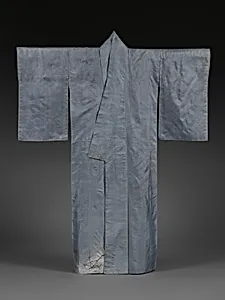
鼠平絹地梅樹模様着物|Kimono with Blossoming Plum Tree
Unknown Artist
second half of the 19th century
Medium
Plain-weave silk with resist dyeing, ink, pigments, silk and metallic-thread embroidery
Dimensions
Overall: 62 × 49 in. (157.5 × 124.5 cm)
Classification
Costumes
Culture & Period
Japan · Meiji period (1868–1912)
Department
Asian Art
Museum
Metropolitan Museum of Art, New York, NY
Credit
Gift of Mr. and Mrs. Victor R. King, 1976
Accession Number
1976.281
Rights
Public Domain
Art Historical Context
This exquisite kimono, titled *Rat Gray Plain-Weave Silk Ground with Plum Tree Pattern* (鼠平絹地梅樹模様着物), hails from Japan's Meiji period (1868–1912), a time of profound transformation as the nation modernized while cherishing traditional crafts. Crafted in the second half of the th century, it measures an impressive 62 × 49 inches, to drape elegantly on the body. The design features blossoming plum trees enduring symbol in Japanese culture of resilience and renewal, as these hardy flowers bloom early in winter, heralding spring amid adversity. Artistically, the kimono showcases masterful techniques on plain-weave silk: resist dyeing to create precise patterns, accented with ink, pigments, and lavish embroidery using silk and metallic threads. This combination reflects the era's high level of textile artistry, where yūzen-style dyeing (a refined resist method) allowed for painterly detail rivaling brushwork on canvas. Such garments were worn by women of means, blending everyday elegance with seasonal poetry. A gift to the Metropolitan Museum of Art from Mr. and Mrs. Victor R. King in 1976, this piece captures Meiji Japan's fusion of tradition and innovation, inviting us to appreciate the kimono not just as clothing, but as wearable art that tells stories of nature's tenacity and human craftsmanship.