
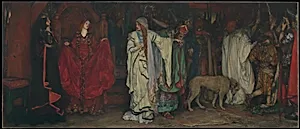
"King Lear," Act I, Scene I
Medium
Oil on canvas
Dimensions
54 1/4 x 127 1/4 in. (137.8 x 323.2 cm)
Classification
Painting
Culture
American
Department
The American Wing
Museum
Metropolitan Museum of Art, New York, NY
Credit
Gift of George A. Hearn, 1913
Accession Number
13.140
Rights
Public Domain
Tags
Art Historical Context
Edwin Austin Abbey's monumental oil on canvas, *"King Lear," Act I Scene I* (1898), captures pivotal moment from Shakespeare's tragedy: the aging king dividing his realm among his daughters amid mounting tension. This vast work, measuring over ten feet wide, immerses viewers in the dramatic intrigue of the British royal court, featuring kings, courtiers, women, and even dogs—likely the faithful hounds that underscore themes of loyalty and betrayal. Abbey, a leading American artist of the late 19th century, was renowned for his Shakespearean illustrations and murals, blending Victorian precision with Pre-Raphaelite influences in richly detailed compositions and luminous colors. Oil on canvas allowed him to achieve the painting's theatrical depth and emotional intensity, evoking the grandeur of Elizabethan drama for Gilded Age audiences. Created during a surge of transatlantic fascination with Shakespeare, it reflects America's cultural aspirations. Housed in the Metropolitan Museum of Art's American Wing since George A. Hearn's 1913 gift, this piece highlights Abbey's mastery of narrative history painting, inviting visitors to ponder timeless questions of power, family, and folly.
About the Artist
Edwin Austin Abbey · 1852–1911
Abbey was one of the leading illustrators during the last quarter of the 19th century. He specialized in illustrating poems and historic novels, including the works of Shakespeare, Pope, and Goldsmith. American illustrator and mural painter. Comment on works: illustrations