
Kingfisher and viburnum
1840s
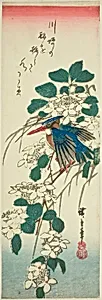
Medium
Color woodblock print; chutanzaku
Dimensions
34.7 × 11.5 cm (13 5/8 × 4 1/2 in.)
Classification
woodblock print
Department
Arts of Asia
Museum
Art Institute of Chicago
Accession Number
87075
Rights
Public Domain
Art Historical Context
Utagawa Hiroshige (1797–1858), one of Japan's most celebrated ukiyo-e masters, captures the serene beauty of nature in *Kingfisher and Viburnum* (1840s). This exquisite color woodblock print depicts a vibrant kingfisher perched amid blooming viburnum branches, rendered in the artist's signature delicate style. The narrow *chutanzaku* format—measuring just 34.7 × 11.5 cm—makes it ideal for display in alcoves or as a hanging scroll substitute, evoking the fleeting elegance of everyday wonders. Created during the Edo period, when ukiyo-e ("pictures of the floating world") flourished, the print showcases Hiroshige's mastery of woodblock techniques. Artisans meticulously carved blocks for each color layer, applying pigments like Prussian blue and vermilion to achieve luminous depth and subtle gradients. Hiroshige's shift from grand landscapes to intimate *kachō-e* (birds-and-flowers) subjects highlights his versatility and the genre's popularity among urban collectors seeking affordable art. Housed in the Art Institute of Chicago's Arts of Asia department, this work exemplifies ukiyo-e's cultural role in celebrating seasonal beauty and impermanence, influencing global artists like Van Gogh and Whistler. Visitors will delight in its poetic harmony, a timeless window into Japan's artistic golden age.
About the Artist
Utagawa Hiroshige · 1826–1869
Utagawa Hiroshige (1797–1858), born Andō Tokutarō, was the last great master of Japanese ukiyo-e woodblock printmaking and one of the most influential landscape artists in history. Born in Edo (modern Tokyo) into a low-ranking samurai family serving as fire wardens, Hiroshige transformed landscape printmaking into a poetic meditation on nature, weather, and everyday life. His revolutionary approac...