
Kneeling Angel
Unknown Artist
ca. 1430–40
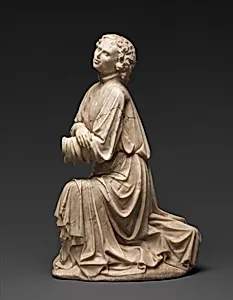
Medium
Alabaster
Dimensions
14 1/2 x 3 3/4 x 8 3/4 in. (36.8 x 9.5 x 22.2 cm)
Classification
Sculpture
Culture
South Netherlandish or German
Department
The Cloisters
Museum
Metropolitan Museum of Art, New York, NY
Credit
The Cloisters Collection, 1965
Accession Number
65.215.3
Rights
Public Domain
Tags
Art Historical Context
Nestled in The Cloisters' collection at the Metropolitan Museum of Art, *Kneeling Angel*ca. 1430–40) exemplifies the refined religious sculpture of South Netherlandish or workshops during the late Gothic period. Carved from alabaster—a soft, translucent stone prized for its luminous quality and of intricate detailing—the 14½-inch figure captures a moment of serene devotion. The angel kneels gracefully, wings folded and hands likely clasped in prayer, embodying the ethereal intermediaries between heaven and earth so revered in medieval Christianity. Alabaster sculptures like this one were popular in Northern Europe, particularly in the Rhineland and Low Countries, for church altarpieces, tombs, and private devotional objects. The medium's subtle glow mimics marble but was more affordable and portable, allowing artists to achieve delicate features, flowing drapery, and expressive poses characteristic of International Gothic style. Though the creator remains unknown, the work reflects the era's emphasis on spiritual elegance and naturalism, bridging the stylized Gothic with emerging Renaissance influences. Today, this poignant piece invites visitors to ponder the role of angels as guardians and messengers in late medieval piety, its preserved details whispering tales of faith across centuries.