
Kneeling Gladiator
Vincenzo Camuccini, 1771–1844
About this artwork
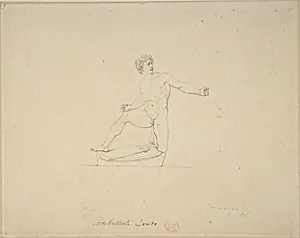
Vincenzo Camuccini’s *Kneeling Gladiator* (. 19th century) captures the timeless drama of ancient heroism in a delicate lead graphite drawing. This intimate study, measuring just 7⅝ × 9½ inches, depicts a muscular male nude in a moment of poised vulnerability—kneeling, perhaps in defeat or exhaustion—evoking iconic classical sculptures like the Borghese Gladiator. Camuccini, a leading Italian Neoclassical artist (1771–1844), drew inspiration from Greco-Roman antiquity, blending precise anatomy with emotional intensity to revive the grandeur of the past. As a preparatory drawing from the Metropolitan Museum of Art’s Department of Drawings and Prints, it exemplifies Neoclassicism’s reverence for antique models. During the late 18th and early 19th centuries, artists like Camuccini studied ancient artifacts to promote moral and aesthetic ideals, often using graphite for its subtle tonal range and portability. This technique allowed for quick, expressive sketches that honed compositions for larger paintings or frescoes. Gifted to the Met in 1887 by Cephas G. Thompson, this work offers museum visitors a glimpse into the artist’s studio process. Its tagged focus on male nudes underscores the era’s fascination with the idealized male form as a symbol of virtue and physical perfection—perfect for pondering the bridge between ancient glory and modern mastery.