
Knife Handle (Kozuka)
18th century
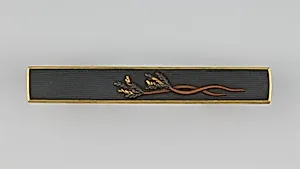
Medium
Copper-gold alloy (shakudō), copper, copper-silver alloy (shibuichi), gold
Dimensions
L. 3 13/16 in. (9.7 cm); W. 9/16 in. (1.4 cm); thickness 1/4 in. (0.6 cm); Wt. 1.4 oz. (39.7 g)
Classification
Sword Furniture-Kozuka
Culture
Japanese
Department
Arms and Armor
Museum
Metropolitan Museum of Art, New York, NY
Credit
Gift of Herman A. E. and Paul C. Jaehne, 1943
Accession Number
43.120.436
Rights
Public Domain
Art Historical Context
This exquisite *Knife Handle (Kozuka)* by Gotō Jūjō, crafted in 18th-century Japan, exemplifies the pinnacle of Edo-period metalworking artistry. As a piece of sword furniture, the kozuka served as the handle for a small utility knife tucked into the scabbard of a samurai's kat or wakizashi. Belonging to the renowned Gotō school—masters of intricate fittings for over 400 years—Jūjō's work functional objects into wearable sculptures, blending utility with profound aesthetic refinement. Fashioned from shakudō (a copper-gold alloy that develops a rich black patina), shibuichi (a copper-silver alloy with a subtle silvery hue), copper, and gold, the handle showcases *toso* techniques like inlaying and patination. These mixed-metal alloys allowed artisans to mimic landscapes, figures, or motifs through contrasting colors and textures, elevating sword mounts to collector's treasures. At just under 4 inches long and weighing a mere 1.4 ounces, its delicate scale highlights the precision of Japanese craftsmanship during a time of relative peace, when samurai culture emphasized artistry over warfare. Now in the Metropolitan Museum of Art's Arms and Armor Department (gift of Herman A. E. and Paul C. Jaehne, 1943), this kozuka invites visitors to appreciate how everyday arms bore the soul of Japan's artistic heritage—elegant, enduring, and profoundly cultural.