
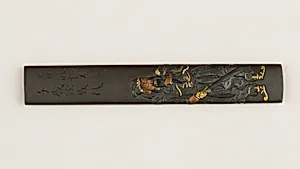
Knife Handle (Kozuka)
Unknown Artist
ca. 1615–1868
Medium
Copper-silver alloy (shibuichi), copper, gold, copper-gold alloy (shakudō)
Dimensions
L. 3 13/16 in. (9.7 cm); W. 9/16 in. (1.4 cm); thickness 1/4 in. (0.6 cm); Wt. 1 oz. (28.3 g)
Classification
Sword Furniture-Kozuka
Culture
Japanese
Department
Arms and Armor
Museum
Metropolitan Museum of Art, New York, NY
Credit
Edward C. Moore Collection, Bequest of Edward C. Moore, 1891
Accession Number
91.1.862
Rights
Public Domain
Tags
Art Historical Context
This exquisite *Knife Handle (Koz)* hails from Japan during the Edo period (. 1615–1868), a time of relative peace when samurai culture flourished and elaborate sword fittings became prized works of art. As part of a warrior's ensemble, the kozuka served as the handle for a small utility knife (kozukatana) tucked into the sword scabbard, blending functionality with stunning decoration. Crafted anonymously, it exemplifies the meticulous artistry of Japanese metalworkers who elevated arms and armor into collector's items. The handle is masterfully fashioned from shibuichi—a copper-silver alloy prized for its subtle gray patina—alongside copper, gold, and shakudō (a copper-gold alloy that darkens to a rich black). These materials allowed artisans to create intricate inlays, damascene work, and surface patination, techniques that produced lifelike textures and glowing highlights. Measuring just under 4 inches long and weighing a mere ounce, its compact form highlights the precision required for such miniature masterpieces. Now in the Metropolitan Museum of Art's Arms and Armor Department, gifted through the Edward C. Moore Collection in 1891, this kozuka invites visitors to appreciate Japan's fusion of martial tradition and aesthetic refinement. A testament to Edo-era craftsmanship, it reminds us how beauty often sheathed the blade.