
Knife Handle (Kozuka)
Unknown Artist
19th century
Medium
Copper-gold alloy (shakudō), gold, silver, copper-silver alloy (shibuichi)
Dimensions
L. 3 13/16 in. (9.7 cm); W. 9/16 in. (1.4 cm); thickness 1/4 in. (0.6 cm); Wt. 1.4 oz. (39.7 g)
Classification
Sword Furniture-Kozuka
Culture
Japanese
Department
Arms and Armor
Museum
Metropolitan Museum of Art, New York, NY
Credit
Bequest of Benjamin Altman, 1913
Accession Number
14.40.903
Rights
Public Domain
Tags
Art Historical Context
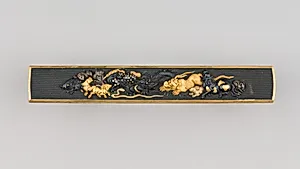
This exquisite 19th-century Japanesekozuka*, or knife handle, is a example of sword furniture from the Arms and Armor collection at The Metropolitan Museum of Art. just under 4 inches long, it served the handle for a small utility (*kozukatana*) tucked into the scabbard a samurai sword—a practical yet highly decorative accessory reflecting the warrior class's blend of function and artistry during Japan's late Edo period. Crafted from traditional alloys like shakudō (a copper-gold mix that develops a rich black patina), shibuichi (copper-silver for subtle grays), gold, and silver, the handle showcases virtuoso metalworking techniques such as inlay, carving, and possibly damascening. Its surface teems with dynamic motifs of Chinese zodiac animals—dragons, boars, horses, monkeys, rabbits, and snakes—symbolizing the cyclical nature of time and fate in East Asian cosmology. These lively creatures, rendered with fine detail, highlight the anonymous artisan's skill in capturing movement and texture on a miniature scale. Bequeathed by Benjamin Altman in 1913, this *kozuka* embodies the cultural pinnacle of *toso* (sword fittings), where everyday weaponry became wearable art. Visitors will appreciate how such objects bridged utility and symbolism, offering a window into Japan's refined aesthetic traditions.