
Knife Handle (Kozuka)
Unknown Artist
18th century
Medium
Iron, silver, copper-silver alloy (shibuichi), copper-gold alloy (shakudō)
Dimensions
L. 3 13/16 in. (9.7 cm); W. 9/16 in. (1.4 cm); thickness 5/16 in. (0.8 cm); Wt. 1.4 oz. (39.7 g)
Classification
Sword Furniture-Kozuka
Culture
Japanese
Department
Arms and Armor
Museum
Metropolitan Museum of Art, New York, NY
Credit
The Howard Mansfield Collection, Gift of Howard Mansfield, 1936
Accession Number
36.120.329
Rights
Public Domain
Tags
Art Historical Context
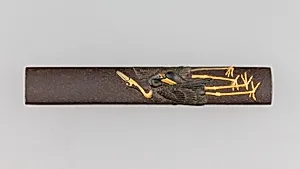
This exquisite 18th-century Japanese *kozuka*, or knife handle, is a example of sword furniture from the Edo period, when samurai culture flourished. Carried as a utility knife alongside larger katana and wakizashi swords, the *kozuka* was both functional and a canvas for artistry, slipped into a scabbard pocket for quick access. Measuring just under 4 inches long, its compact form belies the masterful craftsmanship typical of Japan's arms and armor tradition. Crafted primarily from iron, the handle is enriched with silver, shibuichi (a copper-silver alloy with a subdued patina), and shakudō (a copper-gold alloy that darkens to a rich blue-black). These mixed metals allowed artisans to employ sophisticated techniques like inlay, gold and silver damascening, and nuanced surface treatments, creating intricate designs—here featuring graceful cranes, symbols of longevity, fidelity, and good fortune in Japanese lore. Such decoration elevated the *kozuka* from mere tool to status symbol. Part of The Howard Mansfield Collection at The Metropolitan Museum of Art, this piece highlights the pinnacle of *tosogu* (sword fittings) metalwork, where functionality met poetic beauty. Visitors will appreciate how it reflects Japan's reverence for nature and impermanence, even in objects of war.