
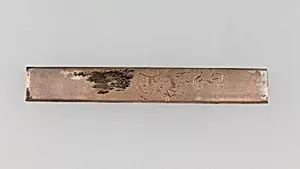
Knife Handle (Kozuka)
Unknown Artist
1669–1733
Medium
Silver
Dimensions
L. 3 13/16 in. (9.7 cm); W. 9/16 in. (1.4 cm); thickness 3/16 in. (0.5 cm); Wt. 0.9 oz. (25.5 g)
Classification
Sword Furniture-Kozuka
Culture
Japanese
Department
Arms and Armor
Museum
Metropolitan Museum of Art, New York, NY
Credit
The Howard Mansfield Collection, Gift of Howard Mansfield, 1936
Accession Number
36.120.351
Rights
Public Domain
Tags
Art Historical Context
This exquisite silver *kozuka*, or knife handle, dates to Japan's Edo period (1669–1733), a time of relative peace under the Tokug shogunate when samurai culture emphasized artistry over warfare. As part of sword furniture, the *kozuka* was inserted into the scabbard of a katana or wakizashi, both practical and decorative purposes. At just 3 13/16 inches long this slender handle (L. 3 13/16 in., 9.7 cm) was a status symbol for elite warriors, blending functionality with refined craftsmanship. Crafted in silver, the medium allowed for intricate techniques like chasing, engraving, or inlay—common in Japanese metalwork of the era. The tags evoking "Fans|Men" suggest motifs of elegant male figures with folding fans, symbols of sophistication, leisure, and seasonal beauty in ukiyo-e-inspired designs. These fittings transformed weapons into wearable art, reflecting the period's obsession with beauty amid stability. A gift from the Howard Mansfield Collection to the Metropolitan Museum of Art in 1936, this piece highlights the global appreciation for Japanese arms and armor. Visitors will appreciate how such small objects encapsulated the samurai's dual role as fighter and aesthete.