
Knife Handle (Kozuka)
Unknown Artist
1785–1876
Medium
Gold, copper-gold alloy (shakudō), copper-silver alloy (shibuichi), copper
Dimensions
L. 3 13/16 in. (9.7 cm); W. 9/16 in. (1.4 cm); thickness 3/16 in. (0.5 cm); Wt. 1 oz. (28.3 g)
Classification
Sword Furniture-Kozuka
Culture
Japanese
Department
Arms and Armor
Museum
Metropolitan Museum of Art, New York, NY
Credit
The Howard Mansfield Collection, Gift of Howard Mansfield, 1936
Accession Number
36.120.396
Rights
Public Domain
Tags
Art Historical Context
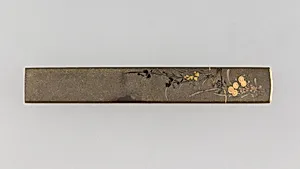
This exquisite *Knife Handle (Kozuka)*, in Japan between 1785 and1876 during the late Edo period, served as a functional yet ornate component of a samurai's sword ensemble. The *kozuka* was the handle for a small utility knife (*kogai*) tucked into the sword scabbard, blending practicality with artistry. In an era of relative peace under the Tokugawa shog, such fittings evolved from battlefield necessities into showcases of refined craftsmanship, reflecting the samurai's status and aesthetic sensibility. Masterfully fashioned from gold, shakudō (a copper-gold alloy that develops a rich black patina), shibuichi (a copper-silver alloy yielding subtle grays), and copper, the handle exemplifies *kinko* metalworking techniques. Artisans likely employed inlay (zōgan) or damascening to create intricate designs, here featuring plant motifs—a common theme symbolizing nature's harmony and seasonal beauty in Japanese art. Measuring just under 4 inches long and weighing a mere ounce, its compact form highlights the precision demanded of Edo-period workshops. Housed in the Metropolitan Museum of Art's Arms and Armor Department as part of The Howard Mansfield Collection (gift of 1936), this *kozuka* invites visitors to appreciate how Japanese sword furniture transformed weapons into wearable sculptures, embodying the wabi-sabi elegance of impermanence and skill.