
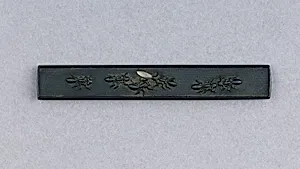
Knife Handle (Kozuka)
Unknown Artist
ca. 1615–1868
Medium
Copper-gold alloy (shakudō), gold, silver
Dimensions
L. 3 13/16 in. (9.7 cm); W. 9/16 in. (1.4 cm); thickness 3/16 in. (0.5 cm); Wt. 1 oz. (28.3 g)
Classification
Sword Furniture-Kozuka
Culture
Japanese
Department
Arms and Armor
Museum
Metropolitan Museum of Art, New York, NY
Credit
H. O. Havemeyer Collection, Bequest of Mrs. H. O. Havemeyer, 1929
Accession Number
29.100.1111
Rights
Public Domain
Tags
Art Historical Context
This exquisite *Kozuka*, or knife handle, hails from Japan during the Edo period (ca 1615–1868), a time when samurai culture flourished and everyday weapons became canvases for artistic mastery. As part of sword furniture, the kozuka was the handle for a small utility knife tucked into the scabbard alongside a warrior's katana. Measuring just under 4 inches long, this compact piece exemplifies the Japanese tradition of transforming functional objects into symbols of refinement and status. Crafted from shakudō—a copper-gold alloy prized for its deep, velvety black patina when chemically treated—the handle is enriched with inlays of gold and silver. These metals likely highlight intricate motifs of insects, a popular theme in Japanese art symbolizing the fleeting beauty of life or seasonal cycles. Such metalworking techniques, including damascening and nuGold inlay, showcase the era's virtuoso craftsmanship, where artisans rivaled painters in precision and subtlety. Now in the Metropolitan Museum of Art's Arms and Armor Department, gifted through the H. O. Havemeyer Collection in 1929, this anonymous masterpiece invites us to appreciate the hidden artistry of Japan's warrior class—where even a knife's grip whispered poetry.