
Knife Handle (Kozuka)
Unknown Artist
ca. 1615–1868
Medium
Copper-silver alloy (shibuichi), gold, silver, copper-gold alloy (shakudō)
Dimensions
L. 3 13/16 in. (9.7 cm); W. 9/16 in. (1.4 cm); thickness 3/16 in. (0.5 cm); Wt. 1.1 oz. (31.2 g)
Classification
Sword Furniture-Kozuka
Culture
Japanese
Department
Arms and Armor
Museum
Metropolitan Museum of Art, New York, NY
Credit
H. O. Havemeyer Collection, Bequest of Mrs. H. O. Havemeyer, 1929
Accession Number
29.100.1112
Rights
Public Domain
Tags
Art Historical Context
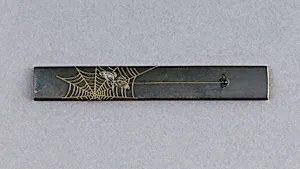
This exquisite knife handle, known as a *kozuka*, hails from Japan's Edo period (ca.1615–1868), a time of relative peace when samurai culture emphasized refined artistry over warfare. Carried in a pocket of the sword scabbard alongside a katana, the *kozuka* served as both a practical utility knife and a showcase for personal taste. Crafted by an unknown master artisan, it exemplifies the intricate metalworking traditions of the era, blending functionality with opulent decoration. Fashioned from shibuichi—a copper-silver alloy prized for its subtle patina—with accents of gold, silver, and shakudō (a copper-gold alloy that darkens to a rich black), the handle features delicate motifs of butterflies and spiders. These inlaid designs, likely executed in hiramaki-zogan (flat metal inlay) technique, highlight the virtuoso skill of Japanese sword furnishers, who transformed humble fittings into miniature sculptures. Butterflies evoke grace and transformation, while spiders suggest intricate webs of fate, drawing viewers into nature's poetic drama. Part of the Metropolitan Museum of Art's renowned H.O. Havemeyer Collection, this 3 13/16-inch (9.7 cm) treasure invites us to appreciate Edo Japan's fusion of martial heritage and aesthetic elegance—a reminder that even weapons bore the beauty of the cosmos.