
Knife Handle (Kozuka)
Unknown Artist
ca. 1615–1868
Medium
Copper-gold alloy (shakudō), gold, silver
Dimensions
L. 3 13/16 in. (9.7 cm); W. 9/16 in. (1.4 cm); thickness 1/4 in. (0.6 cm); Wt. 1.1 oz. (31.2 g)
Classification
Sword Furniture-Kozuka
Culture
Japanese
Department
Arms and Armor
Museum
Metropolitan Museum of Art, New York, NY
Credit
H. O. Havemeyer Collection, Bequest of Mrs. H. O. Havemeyer, 1929
Accession Number
29.100.1142
Rights
Public Domain
Tags
Art Historical Context
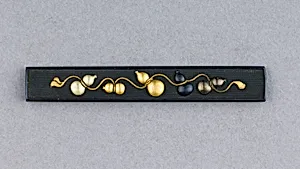
This delicate knife handle, or *kozuka*, hails from Japan's Edo period (ca. 1615–1868), a time when samurai culture blended martial utility with exquisite artistry. Tucked into the scabbard of a katana or wakizashi sword, the kozuka sheathed a small utility knife for everyday tasks like dissecting game or minor repairs, embodying the samurai's practical yet refined lifestyle. Crafted from shakudō—a copper-gold alloy renowned for its dark, velvety patina after chemical treatment—the handle features inlays of gold and silver, likely illustrating gourds. These motifs symbolize longevity, prosperity, and warding off misfortune in Japanese folklore, showcasing the metalworkers' mastery of *zōgan* (inlay) techniques. At just under 4 inches long and weighing a mere 1.1 ounces, its compact form highlights the precision of Edo-era craftsmanship. Part of the Metropolitan Museum of Art's Arms and Armor collection, gifted through the H.O. Havemeyer bequest in 1929, this kozuka reveals how Japanese sword fittings transcended function to become miniature sculptures, celebrating beauty amid the era's peace and cultural flourishing.