
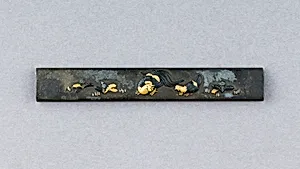
Knife Handle (Kozuka)
Unknown Artist
ca. 1615–1868
Medium
Copper-silver alloy (shibuichi), copper-gold alloy (shakudō), silver, gold
Dimensions
L. 3 13/16 in. (9.7 cm); W. 9/16 in. (1.4 cm); thickness 1/4 in. (0.6 cm); Wt. 1 oz. (28.3 g)
Classification
Sword Furniture-Kozuka
Culture
Japanese
Department
Arms and Armor
Museum
Metropolitan Museum of Art, New York, NY
Credit
H. O. Havemeyer Collection, Bequest of Mrs. H. O. Havemeyer, 1929
Accession Number
29.100.1189
Rights
Public Domain
Tags
Art Historical Context
This elegant *Kozuka*, or knife handle, hails from Japan's Edo period (ca.1615–1868), a time of relative peace under the Tokug shogunate when samurai culture emphasized refinement and artistry. Tucked into the scabbard of a katana or wakizashi sword, the kozuka served as a utility knife for tasks like cutting or self-defense, but its exquisite decoration elevated it to a status symbol. Crafted for a warrior's ensemble, it reflects the era's fusion of martial tradition and aesthetic sophistication. Masterfully fashioned from shibuichi (a copper-silver alloy with a subtle gray patina), shakudō (copper-gold alloy known for its deep blue-black sheen), silver, and gold, this piece showcases virtuoso metalworking techniques like inlaying (zōgan) and patination. Rooster motifs, suggested by its tags, likely adorn its surface—symbols of vigilance, courage, and the dawn in Japanese lore—adding layers of cultural symbolism to its functional form. At just under 4 inches long and weighing an ounce, its compact scale demanded precision craftsmanship. Housed in the Metropolitan Museum of Art's Arms and Armor Department from the H.O. Havemeyer Collection, this anonymous masterpiece highlights how Edo artisans transformed everyday sword fittings into wearable art, blending utility, beauty, and symbolism for Japan's elite warriors.