
Knife Handle (Kozuka)
Unknown Artist
ca. 1615–1868
Medium
Copper-silver alloy (shibuichi), copper-gold alloy (shakudō), gold, silver
Dimensions
L. 3 13/16 in. (9.7 cm); W. 9/16 in. (1.4 cm); thickness 3/16 in. (0.5 cm); Wt. 1.1 oz. (31.2 g)
Classification
Sword Furniture-Kozuka
Culture
Japanese
Department
Arms and Armor
Museum
Metropolitan Museum of Art, New York, NY
Credit
H. O. Havemeyer Collection, Bequest of Mrs. H. O. Havemeyer, 1929
Accession Number
29.100.1205
Rights
Public Domain
Tags
Art Historical Context
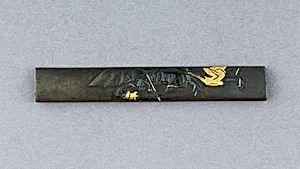
This exquisite *Knife Handle (Kozuka)*, crafted in Japan during the Edo periodca. 1615–1868), exemplifies the metalworking traditions of samurai sword fittings. As a small utility knife handle slipped into the scabbard the main blade, the kozuka blended functionality with artistry. Fashioned from shibuichi (a copper-s alloy with a subtle smoky patina), shakudō (a copper-gold alloy prized for its deep, velvety black), and inlays of shimmering gold and silver, it measures just under 4 inches long—perfectly pocket-sized yet intricately detailed. The surface likely depicts a lively scene of men with umbrellas, evoking everyday Edo life: travelers braving rain or merchants under wagasa parasols, symbols of status and shelter in Japanese culture. Artisans employed sophisticated techniques like *zōgan* (metal inlay) and patination to create depth and narrative charm, turning a utilitarian object into a wearable miniature painting. From the renowned H.O. Havemeyer Collection at The Metropolitan Museum of Art, this piece highlights the Edo era's flourishing decorative arts, where even weapons' accessories reflected ukiyo-e-inspired genre scenes and technical virtuosity. A testament to Japan's isolationist golden age, it invites us to appreciate the samurai's blend of warrior ethos and refined elegance.