
Knife Handle (Kozuka)
Unknown Artist
ca. 1615–1868
Medium
Iron, gold
Dimensions
L. 3 3/4 in. (9.5 cm); W. 9/16 in. (1.4 cm); thickness 5/16 in. (0.8 cm); Wt. 1.1 oz. (31.2 g)
Classification
Sword Furniture-Kozuka
Culture
Japanese
Department
Arms and Armor
Museum
Metropolitan Museum of Art, New York, NY
Credit
H. O. Havemeyer Collection, Bequest of Mrs. H. O. Havemeyer, 1929
Accession Number
29.100.1249
Rights
Public Domain
Tags
Art Historical Context
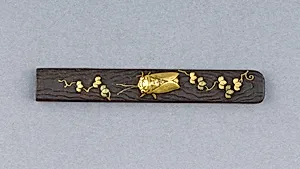
This exquisite *Knife Handle (Kozuka)*, in Japan during the Edo period (. 1615–1868), exemplifies the masterful fusion of utility and artistry in samurai culture. As a component of sword fittings, the kozuka served as the handle for a small utility knife tucked into the scabbard alongside the main katana or wakizashi. During this era of relative peace under the Tokugawa shog, such accessories evolved from mere tools into status symbols, showcasing the wearer's wealth and taste through elaborate decoration. Forged from iron with intricate gold inlays—a technique known as *zōgan*—the handle measures a compact 3¾ inches long, making it both practical and portable. The design likely features insects, a popular motif in Japanese art symbolizing the fleeting beauty of nature, seasonal change, and the impermanence of life (*mono no aware*). These delicate gold elements, hammered into finely chiseled iron, highlight the skill of anonymous *tosogu-shi* metalworkers, who rivaled painters in their precision and poetic expression. Housed in the Metropolitan Museum of Art's Arms and Armor Department, this piece from the H.O. Havemeyer Collection invites us to appreciate how everyday objects became canvases for profound cultural values. Though small, it whispers stories of Japan's refined aesthetic traditions.