
Knife (Kard)
Unknown Artist
18th–19th century
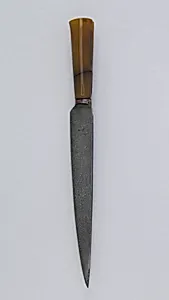
Medium
Steel, gold, enamel, agate
Dimensions
L. 11 11/16 in. (29.7 cm); L. of blade 8 in. (20.3 cm); W. 1 in. (2.5 cm); Wt. 8.3 oz. (235.3 g)
Classification
Knives
Culture
Persian, Qajar
Department
Arms and Armor
Museum
Metropolitan Museum of Art, New York, NY
Credit
Bequest of George C. Stone, 1935
Accession Number
36.25.726
Rights
Public Domain
Art Historical Context
This exquisite *Kard* knife, hailing from Persian Qajar culture in the 18th–19th century, exemplifies the of functionality and opulence in Islamic arms. Measuring nearly 12 inches long with an 8-inch steel blade, this dagger—classified as a *kard*—was both a practical weapon and a symbol of prestige. Crafted during the Qajar dynasty (1789–1925), a period renowned for its lavish courtly arts, it reflects the era's emphasis on beauty even in martial objects. The knife's materials—steel for the blade, accented with gold, enamel, and agate—highlight masterful techniques like damascening or cloisonné enameling, where intricate patterns were fired onto metal for a vibrant, jewel-like finish. Agate, a prized semi-precious stone, often formed the hilt or fittings, adding a touch of natural elegance and luxury. Such embellishments transformed the *kard* from mere tool to wearable art, reserved for nobility or high-ranking warriors. On view in the Metropolitan Museum of Art's Arms and Armor Department, thanks to the 1935 bequest of collector George C. Stone, this piece invites us to appreciate Qajar artisans' skill in blending utility with splendor. It whispers of Persia's rich heritage, where weapons doubled as status symbols in a world of intricate diplomacy and display.