
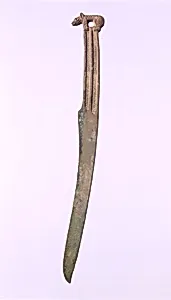
Knife with a Standing Tiger on the Handle
Unknown Artist
7th–6th century BCE
Medium
Bronze
Dimensions
L. 12 1/8 in. (30.8 cm)
Classification
Metalwork
Culture
Northeast China
Department
Asian Art
Museum
Metropolitan Museum of Art, New York, NY
Credit
Gift of Mr. and Mrs. Eugene V. Thaw, 2002
Accession Number
2002.201.7
Rights
Public Domain
Tags
Art Historical Context
This striking bronze knife, crafted in Northeast China during the 7th–6th century BCE, showcases the sophisticated metalworking traditions of early East Asian cultures. Measuring just over 12 inches in length, the object combines practical function with symbolic ornament: a standing tiger forms the handle, its alert posture captured in dynamic detail. Such animal motifs likely held protective or status-related meanings for their original owners, reflecting the region’s deep connection to wildlife and power symbols. Bronze casting in this era represented a pinnacle of technological achievement, allowing artisans to create durable tools and weapons with intricate forms that earlier stone or bone materials could not achieve. The knife’s elegant integration of figure and function highlights the artistic skill of unknown makers who balanced utility with expressive design. As a gift to the Metropolitan Museum’s Asian Art collection, it offers visitors a tangible link to ancient Northeast Chinese societies and their reverence for the natural world.