
Knife with Sheath
Unknown Artist
18th–19th century
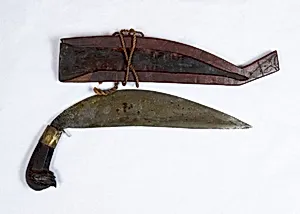
Medium
Steel, wood, cord
Dimensions
L. with sheath 15 1/4 in. (38.7 cm); L. without sheath 12 3/4 in. (32.4 cm); W. 2 in. (5.1 cm); Wt. 10.2 oz. (289.2 g); Wt. of sheath 4.5 oz. (127.6 g)
Classification
Knives
Culture
Philippine, Zamboanga
Department
Arms and Armor
Museum
Metropolitan Museum of Art, New York, NY
Credit
Bequest of George C. Stone, 1935
Accession Number
36.25.789a, b
Rights
Public Domain
Art Historical Context
This exquisite **Knife with Sheath** Zamboanga, Philippines, dates to the 18–19th century and the practical artistry of regional craftsmen. Measuring 15¼ inches (38.7 cm) with its sheath, steel blade extends 12¾ inches (32.4 cm) and weighs a balanced 10.2 ounces (289.2 g), while the lightweight wooden sheath (.5 oz./127.6 g) is reinforced with cord wrapping. Such materials—durable steel for cutting edges, wood for ergonomic grips, and cord for secure binding—highlight functional design honed for both everyday tasks and defense. In the vibrant culture of Zamboanga, part of the southern Philippines' Moro-influenced traditions, knives like this were essential tools and symbols of status during a time of Spanish colonial pressures and local resistance. The unknown artist's techniques reflect indigenous metalworking expertise, where blades were forged for sharpness and resilience, often passed down through generations. Now housed in the Metropolitan Museum of Art's Arms and Armor Department through the 1935 bequest of collector George C. Stone, this piece invites us to appreciate the intersection of utility, craftsmanship, and cultural resilience in precolonial-inspired weaponry.