
Knottekist
1667
Medium
gild
Dimensions
9; 7.5; 5.5
Rights
Public Domain
About this artwork
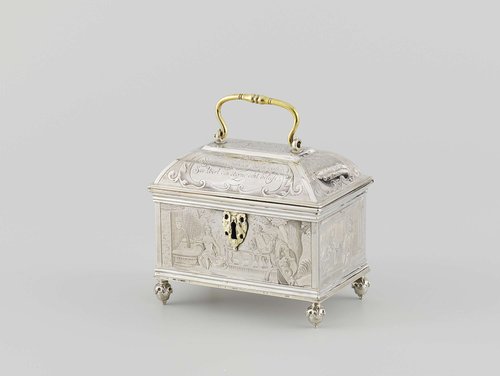
Zilveren bruidskoffertje op vier peervormige georneerde poten, met vergulde slotplaat en hengsel. Zilveren sleuteltje. Rondom gegraveerd met bijbelse scenes: Suzanna door twee ouden mannen bespied; Jozef en de vrouw van Potifar; David en Bathseba en de bruiloft te Kana. Op het plat van het deksel twee verbonden handen, waaronder een brandend hart. Onder de kist: Trijntie Claes glofs.
Art Historical Context
### Knottekist (Bridal Casket), 1667 Crafted by Dutch silversmith Reyndert Bel in 1667, this exquisite *Knottekist*—a small silver bridal casket—stands as a charming relic of the Dutch Golden Age. Measuring just 7.5 cm high, 9 cm long, and 5.5 cm wide, it rests on four pear-shaped, ornamented feet, with a gilded lock plate, handle, and accompanying silver key. Such compact "knot boxes" were intimate betrothal gifts, symbolizing the "knot" of marriage, often personalized for brides-to-be. The casket's surfaces are richly engraved with biblical scenes exploring love, temptation, and fidelity: Susanna spied upon by two elders, Joseph fleeing Potiphar's wife, David succumbing to Bathsheba, and the joyous Wedding at Cana. The lid features two clasped hands cradling a flaming heart—enduring emblems of pledged love and passion. Beneath the casket is inscribed "Trijntie Claes glofs," likely honoring the recipient, Trijntie Claes, tying this piece to a specific 17th-century courtship. In the Baroque era's opulent silversmithing tradition, the intricate engraving and selective gilding highlight technical mastery and moral storytelling. These caskets weren't mere trinkets but cultural touchstones, blending piety with romance to guide newlyweds through marital virtues during a time of prosperous Dutch trade and artistic innovation. A poignant window into personal devotion!