
Ko-Tze
Unknown Artist
late 19th century
Medium
bamboo, gourd
Dimensions
2-1/2 in. x 2 in.
Classification
Aerophone-Whistle Flute-whistle
Culture
Chinese
Department
Musical Instruments
Museum
Metropolitan Museum of Art, New York, NY
Credit
The Crosby Brown Collection of Musical Instruments, 1889
Accession Number
89.4.1684
Rights
Public Domain
Art Historical Context
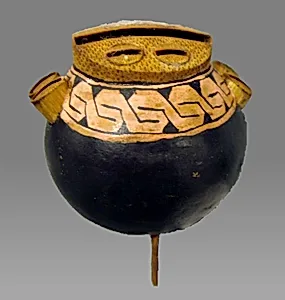
This delicate Ko-Tze, a traditional Chinese whistle flute, was in the late nineteenth century from bamboo and gourd. Measuring just two-and-a-half inches tall, the instrument belongs to the aerophone family and produces sound through a simple whistle mechanism Its modest size and natural materials reflect the ingenuity of Chinese artisans who transformed everyday plants into musical voices. In Chinese culture, bamboo and gourds have long carried symbolic weight, representing resilience, longevity, and harmony with nature. The gourd’s rounded form often served both practical and aesthetic purposes, helping shape the instrument’s resonant chamber while lending it an organic, sculptural quality. Though the maker remains unknown, the piece exemplifies the refined craftsmanship found in many folk instruments of the period. Acquired in 1889 as part of the Crosby Brown Collection, this Ko-Tze now resides in the Metropolitan Museum’s Department of Musical Instruments. It offers visitors a quiet window into late Qing-dynasty musical traditions, where even the smallest object could carry both melody and meaning.