
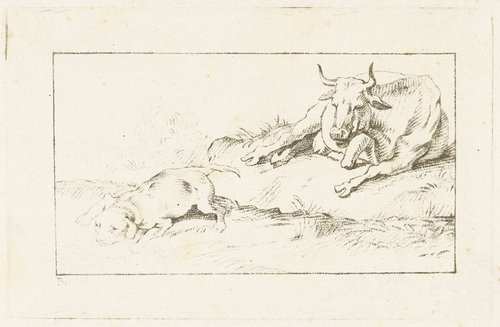
Koe en hond
1740 - 1801
Medium
crayon manner
Dimensions
157; 100
Rights
Public Domain
About this artwork
height 100 mm x width 157 mm
Art Historical Context
Jacobus Buys’s “Koe en hond” is a delicate example of eighteenth-century Dutch draftsmanship. Created sometime between 1740 and 1801, the small work—measuring just 100 by 157 millimeters—depicts a cow and dog in quiet coexistence. Buys, active in Amsterdam and Haarlem, was known for his sensitive portrayals of everyday subjects, often rendered with the same attention once reserved for grand history scenes. The print employs the crayon manner, a specialized intaglio technique that uses textured roulettes and chalk-like strokes to mimic the soft, velvety appearance of red-chalk or graphite drawings. Popular across Europe at the time, this medium allowed artists to reproduce the spontaneity of sketches in multiple impressions, making fine studies more widely available to collectors and students. Though modest in scale, the sheet reflects the period’s growing interest in animal life and rural observation. Its intimate size invites close looking, rewarding viewers with the subtle tonal gradations that define Buys’s skillful handling of the crayon-manner process.
About the Artist
Jacobus Buys · 1724–1801
Comment on works: Portraits; History; Genre; Vignettes