
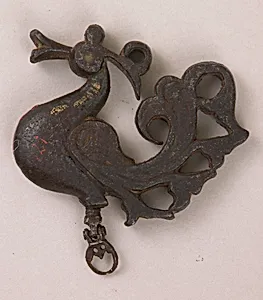
Kohl Bottle in the Shape of a Duck
Unknown Artist
17th–18th century
Medium
Iron; cast and engraved, gold overlay, inlaid eyes
Dimensions
H. 2 5/16 in. (5.9 cm) W. 2 1/4 in. (5.7 cm) D. 3/8 in. (1 cm) Wt. 2.4 oz. (68 g)
Classification
Metal
Department
Islamic Art
Museum
Metropolitan Museum of Art, New York, NY
Credit
Gift of Arthur Jaffe, 1976
Accession Number
1976.159.1
Rights
Public Domain
Tags
Art Historical Context
Nestled in the Metropolitan Museum of Art's Islamic collection, this charming *Kohl Bottle in the of a Duck* dates to the 17th–18th century Crafted as a portable container for kohl—an ancient eyeliner paste used across Islamic cultures for beauty and protection against the evil eye—this diminutive vessel (just over 2 inches tall) blends everyday utility with whimsical artistry. Its duck form, complete with inlaid eyes that catch the light, reflects the Islamic tradition of zoomorphic designs, where animals symbolized grace, fertility, or good fortune. The unknown artisan masterfully worked in iron, casting the body and engraving intricate details before applying a luxurious gold overlay for shimmer and durability. This multi-layered technique highlights the sophistication of Islamic metalworking, where humble materials were transformed into treasures. At a mere 2.4 ounces, it was likely carried in a pocket or pouch, turning a personal grooming item into a subtle status symbol. Gifted to the Met in 1976 by Arthur Jaffe, this bottle invites us to appreciate how Islamic craftsmen elevated the ordinary, merging function, folklore, and fine technique in objects that delighted daily life.