
Kohl Flask
Unknown Artist
9th–10th century
Medium
Soapstone; carved, drilled
Dimensions
H. 1 15/16 in. (5 cm) W. 2 3/4 in. (7 cm) D. 3/16 in. (0.4 cm)
Classification
Stone
Department
Islamic Art
Museum
Metropolitan Museum of Art, New York, NY
Credit
Fletcher Fund, 1976
Accession Number
1976.314.2
Rights
Public Domain
Tags
Art Historical Context
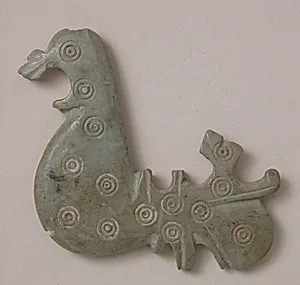
This delicate **Kohl Flask**, crafted in the 9th–10th century during the golden age of the Islamic world, served as a portable container for kohl, the black powder used as eyeliner by both men and women. Part of the Metropolitan Museum of Art's Islamic Art collection (acquired through the Fletcher Fund in 1976), this small soapstone vessel reflects everyday elegance in Abbasid-era society, where personal grooming and adornment were cultural staples. Measuring just 1 15/16 inches high and 2 3/4 inches wide, its compact form (with a remarkably thin depth of 3/16 inch) made it ideal for travelers or daily carry. Carved and drilled from soft soapstone—a material prized for its workability—the flask showcases skilled craftsmanship typical of Islamic stonework. Intricate motifs, including birds, adorn its surface, symbolizing grace and nature in a period when such designs drew from Persian and Central Asian influences. The drilling technique allowed for precise details and a functional neck for dispensing kohl, blending utility with artistry. As a humble yet refined artifact, this flask offers a window into Islamic daily life, where beauty intertwined with practicality. Its survival highlights the durability of soapstone and the enduring appeal of these intimate objects in museum collections today.