
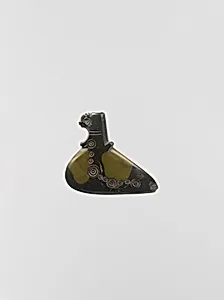
Kohl Flask
Unknown Artist
probably 10th–12th century
Medium
Serpentine; carved, incised
Dimensions
H. 1 7/16 in. (3.7 cm) W. 1 5/8 in. (4.2 cm)
Classification
Stone
Department
Islamic Art
Museum
Metropolitan Museum of Art, New York, NY
Credit
Purchase, Friends of Islamic Art Gifts, 2004
Accession Number
2004.267.3
Rights
Public Domain
Tags
Art Historical Context
Nestled in the Metropolitan Museum of Art's Islamic collection, this delicate kohl flask, dating to the 10th–12th century, offers a glimpse into everyday elegance in the medieval Islamic world. Crafted serpentine—a smooth, green stone prized for its workability and lustrous finish—the flask measures just 1 7/16 inches and 1 5/8 inches wide, perfect for personal adornment. Acquired in 2004 through the Friends of Islamic Art, it exemplifies the refined artistry of anonymous makers who transformed humble materials into treasures. The flask's surface bears intricate carved and incised decorations, highlighted by motifs of birds, symbols often evoking grace, freedom, and the natural world in Islamic design. Serpentine's durability allowed for precise detailing, showcasing advanced stoneworking techniques that required patience and skill. Such vessels were not mere utilities but status symbols, blending functionality with aesthetic beauty. Kohl, a traditional eyeliner made from powdered antimony or galena, was stored in these flasks to protect and enhance the eyes—essential for both cosmetic allure and warding off the desert sun's glare. This little artifact bridges art and daily life, reminding us of the cultural sophistication across regions like Iran or Central Asia during Islam's golden age of craftsmanship.