
金剛夜叉明王|Kongōyasha Myōō
Unknown Artist
12th century
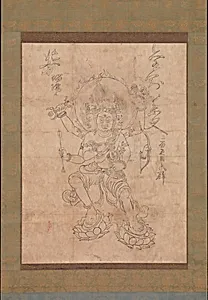
Medium
Hanging scroll; ink on paper
Dimensions
Image: 28 3/8 x 21 1/4 in. (72.1 x 54 cm) Overall with mounting: 65 5/8 x 26 1/2 in. (166.7 x 67.3 cm) Overall with knobs: 65 5/8 x 28 5/8 in. (166.7 x 72.7 cm)
Classification
Paintings
Culture & Period
Japan · Heian period (794–1185)
Department
Asian Art
Museum
Metropolitan Museum of Art, New York, NY
Credit
The Harry G. C. Packard Collection of Asian Art, Gift of Harry G. C. Packard, and Purchase, Fletcher, Rogers, Harris Brisbane Dick, and Louis V. Bell Funds, Joseph Pulitzer Bequest, and The Annenberg Fund Inc. Gift, 1975
Accession Number
1975.268.12
Rights
Public Domain
Tags
Art Historical Context
Behold the fierce yet protective visage of *Kongō Yasha Myōō* (Vajra Yaksha Wisdom King), a 12th-century hanging scroll painted in ink on paper. This Japanese masterpiece from the late Heian period (794–1185) captures the wrathful deity in dynamic form, wielding symbols of power like swords and a bow and arrow, embodying role as a guardian against evil in Esoteric Buddhism. Measuring nearly 28 by 21 inches in its image alone, the scroll's elegant mounting—over five feet tall—highlights its ritual use in temples, where it would be unrolled for meditation and worship. Created by an unknown artist during a time when courtly refinement met spiritual intensity, this work reflects the Heian era's flourishing of Buddhist iconography. Kongō Yasha Myōō, one of the Five Wisdom Kings, channels Vajrayana ferocity to subdue ignorance and demons, a vital motif in Shingon and Tendai traditions. The minimalist ink technique on paper—precise lines evoking motion and menace—exemplifies the period's yamato-e style, blending indigenous aesthetics with imported tantric influences. Housed in the Metropolitan Museum of Art's Asian Art collection, this scroll from The Harry G. C. Packard Collection invites us to confront the divine fury that safeguards enlightenment, a testament to Japan's profound medieval fusion of art and faith.