
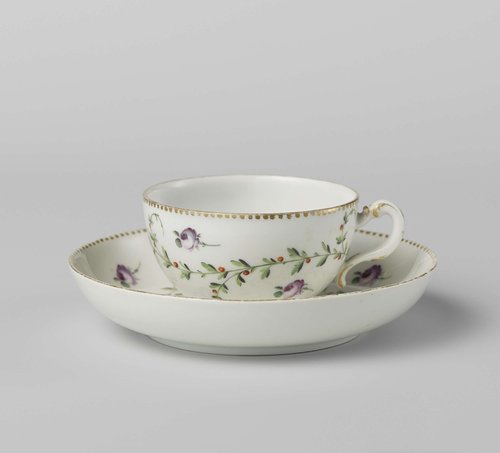
Kop en schotel
ca. 1784
Medium
painting technique
Dimensions
4.3
Rights
Public Domain
About this artwork
height 2.8 x diameter 13.2
Art Historical Context
This delicate cup and saucer, known as "Kop en schotel," was created around 1784 by Manufacture Oud-Loosdrecht, one of the earliest porcelain factories in the Netherlands. Established in the 0s near Amsterdam, the factory produced refined tableware that reflected the growing European demand for locally made porcelain as an alternative to costly imports from China and Saxony. The modest scale—roughly 4 cm in height for the cup—suggests it was intended for refined tea or coffee service, a fashionable social ritual of the period. The piece showcases the factory’s signature painting technique, applied over a soft-paste porcelain body. Skilled decorators used delicate overglaze enamels to create floral or landscape motifs, a hallmark of late-eighteenth-century Dutch production. These painted details not only enhanced the object’s visual appeal but also demonstrated the technical mastery required to fire fragile wares successfully in regional kilns. Though small in size, this cup and saucer embody the aspirations of Dutch industrial ambition during the Enlightenment. Oud-Loosdrecht’s brief but influential output helped establish a national porcelain tradition and remains prized by collectors for its refined decoration and historical rarity.