
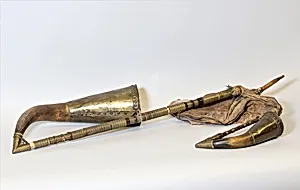
Kozioe
Unknown Artist
late 19th century
Medium
Wood, brass, horn, goatskin
Classification
Aerophone-Reed Vibrated-bagpipe
Culture & Period
Polish · 18th Century
Department
Musical Instruments
Museum
Metropolitan Museum of Art, New York, NY
Credit
The Crosby Brown Collection of Musical Instruments, 1889
Accession Number
89.4.2086
Rights
Public Domain
Art Historical Context
Nestled in the Metropolitan Museum of Art's Department of Musical Instruments, theKozioe* is a captivating example of Polish folk artistry from the late 19th century, reflecting 18th-century traditions.ed by an unknown artist this aerophone—specifically a reed-vibrated bag—embodies the rustic ingenuity of rural Poland, where such instruments animated village celebrations, weddings, and pastoral gatherings. Its name evokes the goat (*koza* in Polish), hinting at cultural ties to pastoral life, with the goatskin bag serving as the resonating chamber that produces its distinctive, droning wail. Masterfully constructed from wood, brass, horn, and goatskin, the *Kozioe* showcases practical yet artistic techniques honed over generations. The wooden chanter and brass fittings allow for precise reed vibration, while the horn elements add durability and a natural acoustic flair. These materials, sourced from the local environment, highlight the instrument's role in everyday cultural expression rather than elite performance. Acquired as part of The Crosby Brown Collection of Musical Instruments in 1889, this piece preserves a slice of Eastern European heritage amid industrialization. Visitors can almost hear its lively strains echoing through Polish countryside festivals, inviting us to appreciate how sound sculptures like the *Kozioe* bridge art, music, and community.