
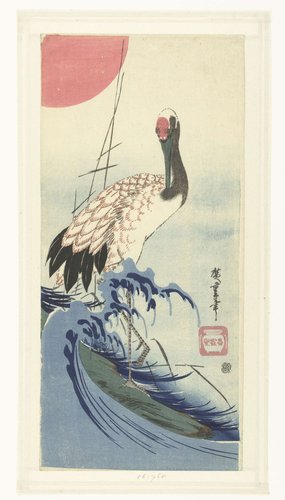
Kraanvogel en rijzende zon
1840 - 1850
Medium
nishiki-e
Dimensions
180; 384
Rights
Public Domain
About this artwork
Purchased with the support of the Vereniging Rembrandt and the Ministerie van Onderwijs, Kunsten en Wetenschappen
Art Historical Context
**Kraanvogel en rijzende zon (Crane and Rising Sun *Utagawa Hirosh (I), 1840–1850* *Nishiki-e (color woodblock print),384 × 180 mm* Behold the serene elegance of Utagawa Hiroshige *Kraanvogel enzende zon*, a nishiki-e print capturing a crane poised gracefully against a radiant rising sun. Hiroshige, a leading figure in Japan's ukiyo-e tradition—"pictures of the floating world"—led in evoking nature's poetic beauty during the late Edo period (1603–1868). Here, the crane, a timeless symbol of longevity and good fortune in Japanese culture, stands tall in a vertical composition, its delicate form illuminated by the dawn's glow, inviting viewers to contemplate harmony and renewal. Nishiki-e, meaning "brocade picture," revolutionized printmaking with its vibrant, multi-layered colors achieved through intricate woodblock techniques—up to 10 or more blocks meticulously carved and overlaid for depth and luminosity. This medium democratized art, making Hiroshige's evocative scenes accessible beyond elite circles. Produced amid Japan's isolationist sakoku policy, such works preserved and popularized native motifs, later inspiring Western Impressionists upon their 19th-century discovery. Acquired with support from the Vereniging Rembrandt and the Dutch Ministry of Education, Arts and Sciences, this gem bridges Eastern artistry with global appreciation, reminding us of art's enduring power to transcend borders.