
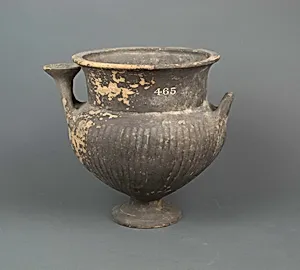
Krater
Unknown Artist
1050–950 BCE
Medium
Terracotta
Dimensions
8in. (20.3cm)
Classification
Vases
Culture & Period
Cypriot · Cypro-Geometric I
Department
Greek and Roman Art
Museum
Metropolitan Museum of Art, New York, NY
Credit
The Cesnola Collection, Purchased by subscription, 1874–76
Accession Number
74.51.612
Rights
Public Domain
Art Historical Context
This delicate terracotta krater, to the Cypro-Geometric I period1050–950 BCE hails from ancient Cyprus during the early Iron Age—a time of cultural transition following the Bronze Age collapse. Standing just 8 inches (20.3 cm) tall, it exemplifies the modest yet functional pottery of Cypriot artisans, who were developing a distinctive geometric style amid influences from neighboring Aegean and Near Eastern cultures. As part of the Metropolitan Museum of Art's Greek Roman Art Department, it a window into Cyprus's vibrant island society, where such vessels played key roles in daily life and rituals. Kraters, wide-mouthed mixing bowls, were essential for diluting wine with water during communal feasts, symposia, or funerary rites, reflecting social and religious practices across the eastern Mediterranean. Crafted from terracotta—fired clay valued for its durability and availability—this example highlights early wheel-throwing techniques and incised or painted geometric motifs typical of the Cypro-Geometric era, marking a shift toward abstract, repetitive patterns that symbolized order and continuity. Acquired through The Cesnola Collection (purchased by subscription, 1874–76), named after explorer Luigi Palma di Cesnola, this krater joins thousands of Cypriot treasures at the Met, underscoring 19th-century passion for ancient artifacts. Though its unknown artist remains anonymous, the piece whispers of Cyprus's enduring legacy in ceramic innovation.