
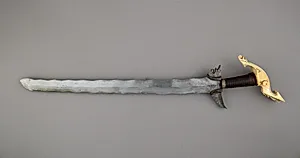
Kris
Unknown Artist
18th–19th century
Medium
Steel, ivory, wood, cord. silver
Dimensions
L. 31 3/8 in. (79.7 cm); L. of blade 24 in. (61 cm); W. 6 1/2 in. (16.5 cm); Wt. 2 lb. 12.4 oz. (1258.7 g)
Classification
Krisses
Culture
Philippine, Sulu
Department
Arms and Armor
Museum
Metropolitan Museum of Art, New York, NY
Credit
Bequest of George C. Stone, 1935
Accession Number
36.25.1249
Rights
Public Domain
Art Historical Context
Step into the world of Southeast Asian martial heritage with this stunning 18th–19th century *kris* from the Sulu region of the Philippines. Crafted by an unknown artist, this dagger exemplifies the *kris* classification, a revered type of asymmetrical blade weapon prized across island cultures. Measuring 31⅜ inches long with a 24-inch steel blade, it weighs just over 2½ pounds, balancing lethality with elegance. The hilt, adorned with ivory, wood, silver, and cord wrapping, showcases exquisite materials that denote high craftsmanship and status. In Sulu Moro culture, the *kris* transcended mere weaponry, serving as a symbol of power, identity, and spiritual protection. Warriors believed the blade's distinctive wavy *luk* pattern—forged through repeated folding and hammering of steel—held mystical properties, channeling ancestral strength against Spanish and American colonizers during centuries of resistance. The luxurious hilt materials, including carved ivory and silver inlays, highlight elite artistry, often customized for nobility. Today, this piece from the Metropolitan Museum of Art's Arms and Armor Department, gifted through the 1935 bequest of collector George C. Stone, invites us to appreciate the fusion of utility, beauty, and cultural resilience in Philippine history.