
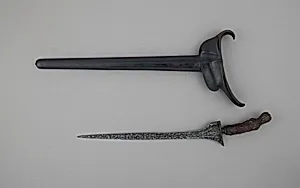
Kris with Sheath
Unknown Artist
16th–19th century
Medium
Steel, wood, copper alloy
Dimensions
L. with sheath 19 1/8 in. (48.6 cm); L. without sheath 15 3/4 in. (40 cm); L. of blade 12 in. (30.5 cm); W. 2 1/4 in. (5.7 cm); Wt. 4.6 oz. (130.4 g); Wt. of sheath 6.6 oz. (187.1 g)
Classification
Krisses
Culture
Sumatran
Department
Arms and Armor
Museum
Metropolitan Museum of Art, New York, NY
Credit
Bequest of George C. Stone, 1935
Accession Number
36.25.1242a, b
Rights
Public Domain
Art Historical Context
This exquisite *Kris with Sheath hails from Sumatra, Indonesia, dating to the 16th–19th—a period when these iconic daggers embodied the region's rich warrior culture and spiritual traditions. Crafted by an unknown artisan, the kris is a hallmark of Southeast Asian arms, classified among the Metropolitan Museum of Art's renowned collection of krisses. Measuring 19⅛ inches with its sheath, it weighs a mere 11.2 ounces total, balancing lethal functionality with elegant portability. Forged from steel for the blade (12 inches long with a 2¼-inch width), the hilt and sheath feature wood and copper alloy, showcasing masterful Sumatran metalworking and woodworking techniques. The undulating *luk* (wave pattern) of the blade, a defining trait of krisses, was not just aesthetic but believed to hold mystical power, channeling the owner's soul or warding off evil. Sheaths were often status symbols, richly adorned for ceremonies or elite combat. Bequeathed to The Met in 1935 by George C. Stone, this piece highlights Sumatra's fusion of utility and artistry in arms and armor. Visitors, admire how such weapons transcended battlefields to become cherished heirlooms, reflecting centuries of cultural prestige.