
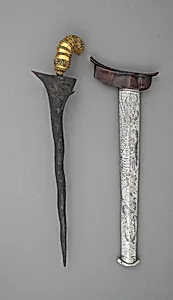
Kris with Sheath
Unknown Artist
19th century
Medium
Steel, wood, gold, diamonds, silver
Dimensions
L. with sheath 15 7/8 in. (40.3 cm); L. without sheath 15 1/4 in. (38.7 cm); W. 3 in. (7.6 cm); Wt. 7.4 oz. (209.8 g); Wt. of sheath 4.5 oz. (127.6 g)
Classification
Krisses
Culture
Indonesian
Department
Arms and Armor
Museum
Metropolitan Museum of Art, New York, NY
Credit
The Collection of Giovanni P. Morosini, presented by his daughter Giulia, 1932
Accession Number
32.75.256a, b
Rights
Public Domain
Art Historical Context
Behold the exquisite *Kris with Sheath a 19th-century masterpiece from Indonesia, showcased in the Metropolitan Museum of Art's Arms and Armor Department. Crafted from steel for the blade, with a sheath of wood embellished in gold, diamonds, and silver, dagger exemplifies the opulent craftsmanship of its era. Measuring 15 7/8 inches (40.3 cm) with and weighing a mere 11.9 ounces (337.4 g) total, its lightweight yet formidable design balances functionality and finery, highlighting the kris's dual role as weapon and status symbol. In Indonesian culture, the kris—classified among traditional krisses—was far more than a mere blade. Its distinctive wavy steel edge, often forged with intricate damascening techniques, held spiritual significance, believed to house a soul or supernatural powers. Adorned with precious diamonds and gold, this example likely belonged to nobility, used in ceremonies, dances, or as a heirloom. The lavish materials underscore the artisan's mastery in metalwork and inlay, blending utility with artistry in Southeast Asian tradition. Generously gifted in 1932 from Giovanni P. Morosini's collection by his daughter Giulia, this kris invites visitors to ponder the rich tapestry of Indonesian heritage, where beauty and power intertwine.