
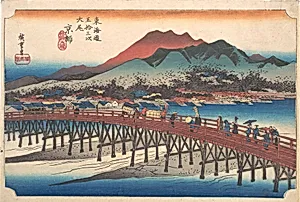
歌川広重画 「東海道五十三次 大尾 京師 三条大橋」|Kyoto: The Great Bridge at Sanjō (Taibi, Keishi, Sanjō Ōhashi), from the series Fifty-Three Stations of the Tōkaidō (Tōkaidō gojūsan tsugi)
ca. 1833–34
Medium
Woodblock print; ink and color on paper
Dimensions
9 3/5 x 14 1/16 in. (24.4 x 35.7 cm)
Classification
Prints
Culture & Period
Japan · Edo period (1615–1868)
Department
Asian Art
Museum
Metropolitan Museum of Art, New York, NY
Credit
Rogers Fund, 1918
Accession Number
JP525
Rights
Public Domain
Tags
Art Historical Context
Utagawa Hiroshige *Kyoto: The Great Bridge atjō*, from his renowned series *Fifty-Three of the Tōkaidō* (ca. 1833–34), captures a bustling scene along Japan's historic coastal highway. This woodblock print depicts the iconic Sanjō Ōhashi bridge spanning the Kamo River in Kyoto, with travelers crossing amid misty mountains and flowing waters. Hiroshige, a master the ukiyo-e ("pictures of the floating world") tradition, infuses the composition with dynamic human figures—merchants, pilgrims, and porters—evoking the vibrancy of Edo-period travel. The Tōkaidō road linked Edo (modern Tokyo) to Kyoto, serving as a vital artery for samurai, merchants, and commoners during the isolated Tokugawa shogunate (1615–1868). Hiroshige's series, comprising 55 prints (including starting and ending points), romanticized these 53 relay stations, making distant landscapes accessible to urban audiences through affordable prints. This work highlights Kyoto's grandeur as the imperial capital, blending everyday life with poetic natural beauty. Hiroshige's genius lies in his innovative use of color and perspective in woodblock printing, layering inks for luminous effects and employing bold diagonals to draw viewers into the depth of the scene. A cornerstone of Japanese art, it influenced Western artists like Van Gogh and remains a testament to ukiyo-e's global legacy. (198 words)
About the Artist
Utagawa Hiroshige · 1826–1869
Utagawa Hiroshige (1797–1858), born Andō Tokutarō, was the last great master of Japanese ukiyo-e woodblock printmaking and one of the most influential landscape artists in history. Born in Edo (modern Tokyo) into a low-ranking samurai family serving as fire wardens, Hiroshige transformed landscape printmaking into a poetic meditation on nature, weather, and everyday life. His revolutionary approac...