
L'Assiette Républicaine
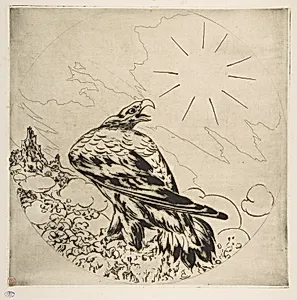
Medium
Etching
Dimensions
Sheet: 11 7/16 in. × 11 in. (29 × 28 cm) Plate: 9 5/16 × 9 5/16 in. (23.6 × 23.6 cm)
Classification
Prints
Department
Drawings and Prints
Museum
Metropolitan Museum of Art, New York, NY
Credit
Gift of David Keppel, 1922
Accession Number
22.1.34
Rights
Public Domain
Tags
Art Historical Context
Félix Bracquemond's *L'Assiette Républic* (1868) is a captivating etching that showcases the artist's mastery of printmaking during a pivotal era in French art. As a leading figure in the 19th revival of etching, Bracquemond— called the "etcher's etcher"—produced this intimate square composition on a sheet measuring 11 7/16 × 11 inches. Housed in the Metropolitan Museum of Art's Drawings and Prints department (gift of David Keppel, 1922), the work exemplifies the medium's precision, where acid etches intricate lines into a metal plate to create rich, tonal depth. The title, translating to "The Republican Plate," evokes a decorative plate design, likely featuring birds—a motif tagged here that reflects Bracquemond's fascination with nature and Japanese-inspired patterns. Etching allowed him to render fine details with remarkable fluidity, bridging fine art and design. This technique gained prominence in the 1860s as artists like Bracquemond elevated prints from reproductive tools to standalone masterpieces, influencing Impressionists such as Degas and Whistler. Created amid the Second French Empire's political tensions, the "républicaine" reference hints at subtle republican symbolism, blending artistry with cultural commentary. Visitors will appreciate how this modest yet sophisticated print captures Bracquemond's innovative spirit, inviting closer inspection of its delicate lines and avian elegance.
About the Artist
Félix Bracquemond · 1833–1914
French, Paris 1833–1914 Sèvres