
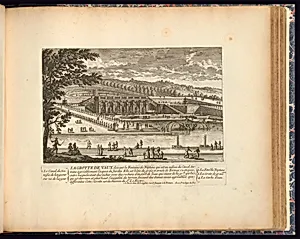
LA GROTTE DE VAUX
1661–1703
Medium
Classification
Department
Smithsonian Collection
Museum
Smithsonian American Art Museum
Credit
Purchased for the Museum by the Advisory Council
Accession Number
1921-6-533-168
Rights
Public Domain
About this artwork
Research in Progress
Art Historical Context
Gabriel Perelle’s “La Grotte de Vaux,” created between 1661 and 1703, offers a glimpse into seventeenth-century French printmaking. Working in Paris during the height of the Baroque era, Perelle specialized in detailed landscape etchings that captured both natural scenery and celebrated architectural sites. This print, likely depicting the grotto within the celebrated gardens of Vaux-le-Vicomte, reflects the period’s fascination with formal French garden design and the desire to share such wonders beyond their physical locations. As a print rather than a painting, the work could be produced in multiple impressions, allowing wider audiences to appreciate the dramatic rock formations and engineered water features of the grotto. Perelle’s precise line work and atmospheric shading bring depth to the scene, transforming a private estate feature into an accessible image for collectors and scholars alike. Now held in the Smithsonian American Art Museum, the sheet continues to illustrate how prints served as both artistic records and cultural ambassadors, preserving the innovative landscape architecture of Louis XIV’s France for generations to come.