
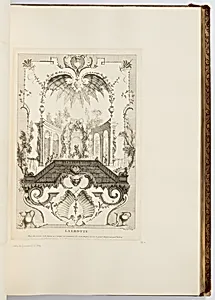
LA GROTTE
1723-1735
Medium
Bound print
Classification
Bound print
Department
Smithsonian Collection
Museum
Smithsonian American Art Museum
Credit
Purchased for the Museum by the Advisory Council
Accession Number
1921-6-224-53
Rights
Public Domain
About this artwork
Research in Progress
Art Historical Context
**LA GROTTE** by Watteau (French, 1684–1721) captures the enchanting essence of early 18th-century French Rococo art. Though dated 1723–1735—after Watteau's untimely death—this bound print is a posthumous, likely an engraving derived from one of his delicate drawings or paintings. Watteau, a master of *fêtes galantes*elegant scenes of courtship and leisure among the aristocracy—often depicted idyllic outdoor settings like grottos, evoking a dreamlike world of romance and fantasy. "La Grotte" (The Grotto) exemplifies this, inviting viewers into a shaded, intimate retreat that blends nature's whimsy with human grace. As a bound print, this work highlights the era's innovative printmaking techniques, which allowed Watteau's ephemeral chalk drawings to reach a broader audience beyond oil paintings. Rococo's playful asymmetry, soft lighting, and vibrant yet subtle colors shine through in such reproductions, influencing decorative arts across Europe. Acquired by the Smithsonian American Art Museum through the Advisory Council, it reflects the artist's enduring legacy in American collections. Though research continues, *LA GROTTE* offers a window into Watteau's poetic vision, where artifice meets nature in harmonious reverie—a perfect gem for contemplating the fleeting joys of the Belle Époque's precursors. (198 words)