
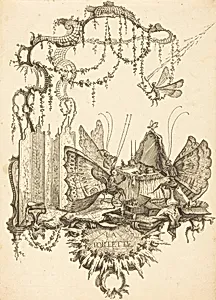
La Toilette
in or after 1756
Medium
etching on laid paper
Dimensions
sheet (trimmed to plate mark): 33.2 x 23.8 cm (13 1/16 x 9 3/8 in.)
Classification
Department
CG-E
Museum
National Gallery of Art, Washington, D.C.
Credit
Rosenwald Collection
Accession Number
1958.8.134
Rights
Public Domain
Art Historical Context
Step into the elegant world of 18th France with *La Toilette*, a etching by Charles Germain de-Aubin, created in or after 1756. Saint-Aubin (1721–1786), master engraver from a prolific family of artists captured the intimate rituals of daily life in the Rococo style—characterized by its playful ornamentation, soft curves, and focus on fashionable leisure. This print, measuring 33.2 x 23.8 cm, evokes the refined domestic scenes popular among the French aristocracy during Louis XV's reign. Etching on laid paper was a favored technique of the era, where acid etches intricate lines into a metal plate, allowing for nuanced shading and texture that mimic drawing. The visible laid lines of the paper add to its authenticity, a hallmark of high-quality 18th-century printmaking. *La Toilette* ("The Toilette") likely depicts a woman in her morning grooming routine—a motif symbolizing femininity, vanity, and luxury that reflected the cultural obsession with beauty and refinement. Housed in the National Gallery of Art's Rosenwald Collection, this work exemplifies how prints democratized art, making Rococo's charm accessible beyond oil paintings. Saint-Aubin's precise yet whimsical touch invites us to linger on the era's graceful frivolity.